

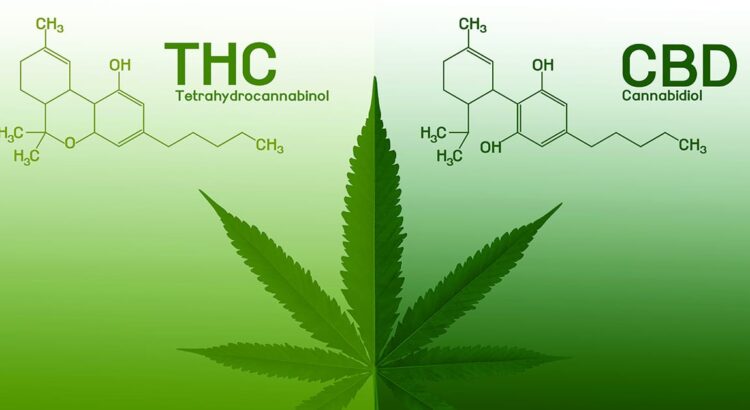
The cannabis plant contains more than one hundred unique chemical compounds known as cannabinoids. Among this complex botanical mixture, two specific compounds stand out far above the rest: cannabidiol and tetrahydrocannabinol. More commonly recognized by their abbreviations, CBD and THC are the primary active ingredients responsible for the vast majority of physical and psychological effects associated with cannabis use.
Despite sharing an identical biological origin and a surprisingly similar chemical blueprint, these two compounds behave in completely different ways once they enter the human body. As public interest in cannabis wellness reaches an all-time high, understanding the distinct operational properties, mechanisms of action, and legal classifications of CBD versus THC is essential for making safe and informed decisions.
The Molecular Similarity and the Structural Divergence
To understand why these compounds produce such contrasting effects, it helps to start at the molecular level. A fascinating aspect of organic chemistry is that CBD and THC are chemical isomers. This means they share the exact same molecular formula. Both compounds are comprised of twenty-one carbon atoms, thirty hydrogen atoms, and two oxygen atoms.
However, the structural arrangement of these atoms differs slightly. THC features a closed cyclic ring in its core structure, whereas CBD contains an open ring with a hydroxyl group. This minor structural variation drastically alters how each molecule fits into the biological receptors of the human nervous system.
Think of it as two keys that look almost identical at a glance, but feature slightly different ridges. Because of these distinct physical shapes, they unlock entirely different chemical pathways inside your body.
Interaction with the Endocannabinoid System
The human body possesses a regulatory network called the Endocannabinoid System. This biological system plays a critical role in managing homeostatic balance, regulating essential functions such as sleep cycles, immune system responses, mood stability, memory retention, and physical pain perception. The system relies on two primary types of cellular receptors: Cannabinoid Receptor 1, found predominantly in the brain and central nervous system, and Cannabinoid Receptor 2, located mainly in the immune tissues and peripheral organs.
How THC Interacts with Receptors
THC fits perfectly into the structural shape of Cannabinoid Receptor 1. When a person consumes THC, the compound binds directly and strongly to these receptors in the brain. This direct connection stimulates a cascade of chemical signaling, mimicking the actions of anandamide, a naturally occurring compound often referred to as the bliss molecule. By flooding these central receptors, THC temporarily alters standard neural communication, producing the characteristic intoxication and mind-altering sensations associated with being high.
How CBD Interacts with Receptors
CBD does not bind directly to Cannabinoid Receptor 1 or Cannabinoid Receptor 2. In fact, its binding affinity for these receptors is incredibly weak. Instead, CBD operates as an indirect modulator. It works in the background by discouraging your body’s natural enzymes from breaking down its own internally produced endocannabinoids.
Furthermore, CBD can actually sit loosely on Cannabinoid Receptor 1 without activating it, physically blocking THC from binding efficiently. This means that when CBD and THC are consumed together, the presence of CBD can naturally buffer and tone down the intense psychoactive impact of the THC.
Psychoactive Property Differences: Intoxicating vs. Non-Intoxicating
The single most significant practical distinction for consumers evaluating CBD versus THC is the presence or absence of intoxicating psychoactivity.
The THC Experience
THC is highly psychoactive and distinctly intoxicating. It alters cognitive function, distorts the perception of time, enhances sensory inputs, and can induce deep feelings of euphoria or physical sedation. While many people enjoy these properties for recreational or therapeutic relaxation, the psychoactive intensity of THC can sometimes trigger unwanted side effects, such as short-term memory gaps, slowed reaction times, coordination issues, heightened anxiety, or paranoia, especially when consumed in large amounts.
The CBD Experience
CBD is entirely non-intoxicating. It will not alter your sensory perception, disrupt your cognitive faculties, or make you feel high. Consumers frequently describe the psychological sensation of CBD as a subtle sense of mental clarity, grounded relaxation, or a reduction in baseline tension. Because it delivers therapeutic relief without changing a person’s mental state, CBD has become an incredibly popular option for individuals who need to remain clear-headed, focused, and fully functional throughout their workday or daily routines.
Comparing Medical Applications and Health Benefits
While both compounds offer profound therapeutic benefits, their distinct mechanisms of action make them suited for managing different types of physical and mental health conditions.
Primary Therapeutic Uses for CBD
Because of its unique ability to modulate the immune response and calm the nervous system without causing intoxication, CBD is utilized for a wide array of wellness applications:
-
Managing Seizure Disorders: CBD is highly recognized for its anticonvulsant properties. It serves as the active ingredient in the first cannabis-based medication approved by the Food and Drug Administration, used to treat severe forms of childhood epilepsy.
-
Anxiety and Stress Management: CBD supports serotonin receptors in the brain, helping to lower chronic anxiety, panic disorders, and daily stress levels.
-
Inflammation and Joint Discomfort: By regulating immune cell activity, CBD helps alleviate localized swelling and chronic inflammation, making it a popular choice for joint stiffness.
Primary Therapeutic Uses for THC
THC possesses powerful physical properties that target deep systemic issues, making it a cornerstone of medical cannabis programs worldwide:
-
Pain Modulation: THC alters the way the central nervous system processes pain signals, providing substantial relief for chronic nerve pain and deep muscle spasms.
-
Appetite Stimulation: THC interacts with the brain centers responsible for hunger, helping to counteract severe nausea and restore appetite in patients undergoing intensive medical treatments like chemotherapy.
-
Glaucoma Relief: THC temporarily reduces fluid pressure within the eyes, assisting in the management of glaucoma symptoms.
Legal Status and Regulatory Variations
The legal boundaries separating CBD and THC are defined heavily by the botanical source from which the compounds are extracted. The cannabis plant family is generally divided into two legal categories: industrial hemp and marijuana.
Under United States federal law, industrial hemp is defined strictly as cannabis plants containing a delta-nine THC concentration of zero point three percent or less by dry weight. The Agricultural Improvement Act legally removed hemp-derived CBD from the federal controlled substances list. As long as a CBD product is extracted from legal hemp crops and remains within the strict THC limit, it is federally legal across the nation, though individual state regulations can still vary.
Conversely, marijuana refers to cannabis plants that produce higher levels of THC. Because of its intense psychoactive properties, marijuana-derived THC remains classified as a controlled substance at the federal level. Despite this federal restriction, a vast majority of states have passed independent legislation creating legal medical or adult-use recreational cannabis markets within their state borders.
Frequently Asked Questions
Can CBD convert into THC inside the human stomach?
No. An old theory suggested that the acidic environment of the human stomach could potentially convert CBD into THC. However, extensive clinical studies have thoroughly debunked this hypothesis, proving that human gastric juices do not transform CBD into psychoactive THC during digestion.
Is it possible to build up a physical tolerance to CBD?
Unlike THC, which requires users to consume larger amounts over time to achieve the same effects due to receptor desensitization, CBD does not cause standard tolerance build-up. Many users report experiencing a reverse tolerance effect, meaning they actually require less CBD over time to achieve their desired wellness outcomes as the compound accumulates in their system.
What is delta-eight THC, and how does it differ from regular THC?
Regular THC is technically known as delta-nine THC. Delta-eight THC is a chemical analog that features a double bond on the eighth carbon chain rather than the ninth. It occurs naturally in tiny trace amounts within hemp plants and produces a much milder, less anxious psychoactive high compared to standard delta-nine THC.
Why do some CBD products contain a very small amount of THC?
Full-spectrum CBD products are designed to include all the natural compounds found in the hemp plant, which includes legal trace amounts of THC under zero point three percent. This inclusion is intentional, as these compounds work together synergistically to enhance the overall effectiveness of the product.
How does the consumption method impact how long CBD or THC stays in your body?
Inhaling cannabis delivers cannabinoids directly to the lungs, resulting in immediate effects that clear from the bloodstream within a few hours. Ingesting cannabinoids via edibles forces the compounds through the digestive system and liver, creating a much slower release that can linger in the body for six to eight hours.
Can you use CBD isolates if you want to avoid THC entirely?
Yes. CBD isolate is the purest form of cannabidiol available, created by processing the plant extract to strip away every single cannabinoid, terpene, and plant matter until only pure crystalline CBD remains, ensuring absolute zero percent THC content.